From Kitchen Table to Six Figures: How Email Marketing Transformed a Small Soap Business
Picture Martha, a small business owner who sells handmade soaps from her kitchen table. Three years ago, she was struggling to reach customers beyond her immediate neighborhood. Today, she runs a six-figure business, and her secret isn’t some fancy marketing scheme or expensive advertising campaign. It’s something as simple as sending emails to people who actually want to hear from her. The benefits of email marketing transformed Martha’s tiny soap empire into a thriving business, and her story isn’t unique.
Email marketing might seem as outdated as flip phones and dial-up internet, but here’s the plot twist that would make M. Night Shyamalan jealous: it’s actually one of the most powerful marketing tools available today. While everyone’s chasing the latest social media trends and throwing money at flashy advertisements, smart business owners are quietly building email lists that generate consistent, predictable revenue.
The Numbers Don’t Lie (Even When We Want Them To)
Let’s talk cold, hard facts. For every dollar spent on email marketing, the average return is $42. That’s not a typo, and no, I didn’t accidentally hit the “4” key while reaching for my coffee. That’s a 4,200% return on investment, which makes email marketing more profitable than finding a twenty-dollar bill in your old jeans pocket every single day for a year.
Compare this to social media advertising, where you’re essentially paying to interrupt people who are trying to watch cat videos and argue with strangers about pineapple on pizza. Social media platforms can change their algorithms faster than a teenager changes their relationship status, making your carefully crafted posts disappear into the digital void without warning.
The benefits of email marketing become even more apparent when you consider reach. While social media posts might reach 2-5% of your followers on a good day (and that’s being optimistic), emails land directly in your subscribers’ inboxes with a 99% deliverability rate. It’s like having a direct hotline to your customers, except they actually answered the phone and said, “Yes, please call me about your products.”
Building Relationships, Not Just Customer Lists
Here’s where email marketing gets interesting—and slightly romantic, in a business-y sort of way. Email allows you to build genuine relationships with your customers. Unlike the fleeting nature of social media interactions, emails create an intimate space where you can have real conversations with your audience.
Think about your own inbox. When you receive an email from a brand you love, you probably read it differently than you would scroll past their social media post. There’s something personal about email—it feels like a message specifically for you, even when you know it was sent to thousands of people.
Sarah, who runs an online photography course, discovered this firsthand. She started sending weekly emails sharing photography tips, behind-the-scenes stories from her shoots, and personal anecdotes about her journey as a photographer. Her subscribers began replying to her emails, sharing their own stories and asking for advice. What started as a marketing tool became a community of photography enthusiasts who trusted Sarah’s expertise and eagerly purchased her courses.
The benefits of email marketing extend beyond just selling products—they create brand loyalty that’s harder to achieve through other channels. When customers feel connected to your story and invested in your success, they become advocates who refer friends and defend your brand in online reviews.
Timing Is Everything (And You Control the Clock)
One of the most underappreciated benefits of email marketing is timing control. Social media posts are at the mercy of algorithms and user behavior patterns that change more frequently than fashion trends. Post at the wrong time, and your content might as well be a tree falling in an empty forest – technically it happened, but nobody heard it.
Email marketing flips this script. You decide when your message reaches your audience. Want to announce a flash sale at 2 PM on a Tuesday? Send an email. Need to share urgent information with your customers? Email gets there instantly. Planning a product launch for next month? Schedule your email sequence and watch it work while you sleep.
This control over timing becomes even more valuable when you consider customer behavior. People check their email throughout the day, often multiple times. Your message sits in their inbox until they’re ready to engage with it, unlike social media posts that disappear into the endless scroll after a few hours.
Personalization That Actually Means Something
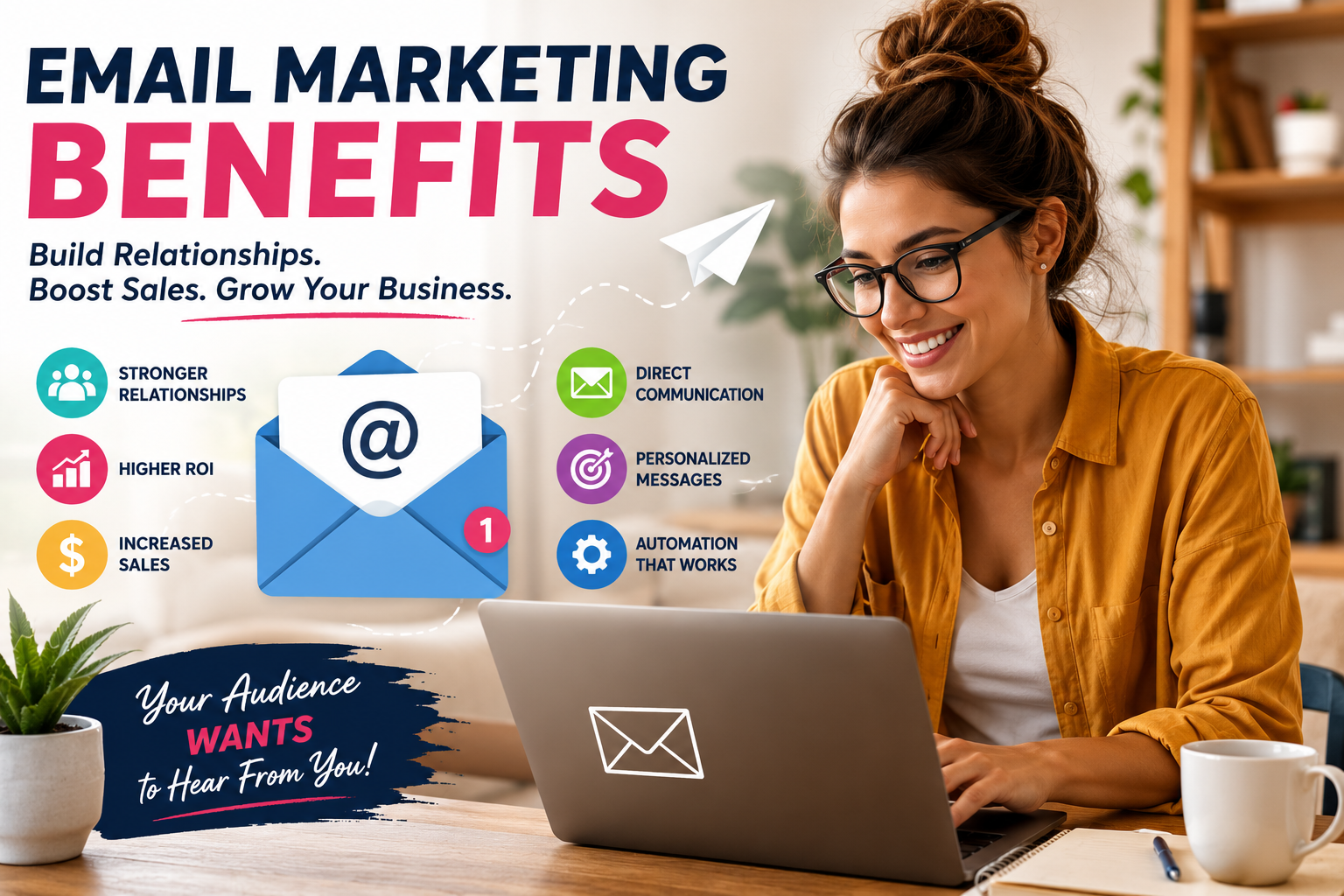
The benefits of email marketing really shine when it comes to personalization. We’re not talking about simply inserting someone’s first name into a generic template (though that’s a nice touch). Modern email marketing allows for sophisticated personalization based on customer behavior, preferences, and purchase history.
Consider David, who runs an online bookstore. Instead of sending the same promotional email to everyone, he segments his list based on reading preferences. Romance novel enthusiasts receive emails about new releases in their favorite genre, while business book readers get notifications about leadership and entrepreneurship titles. The result? His email open rates increased by 150%, and sales doubled within six months.
This level of personalization creates experiences that feel tailor-made for each subscriber. When someone receives an email that perfectly matches their interests and needs, it doesn’t feel like marketing – it feels like helpful information from a friend who knows their taste.
Cost-Effectiveness That Makes Your CFO Smile
Let’s have an honest conversation about marketing budgets. Most small businesses operate on shoestring budgets where every dollar spent needs to justify its existence. Traditional advertising can drain bank accounts faster than a teenager with their first credit card, often with questionable results.
Email marketing laughs in the face of expensive advertising costs. Most email marketing platforms charge based on the number of subscribers, with prices that won’t require you to sell a kidney on the black market. A business with 1,000 subscribers might pay $20-50 per month for email marketing services, compared to hundreds or thousands of dollars for pay-per-click advertising or social media ads.
The long-term value makes this investment even more attractive. Unlike paid advertising, where your visibility disappears the moment you stop paying, your email list is an asset you own. These subscribers have given you permission to contact them directly, creating a marketing channel that doesn’t depend on external platforms or changing algorithms.
Measurable Results That Tell Real Stories
One of the most satisfying benefits of email marketing is the ability to track and measure results with precision that would make a Swiss watchmaker jealous. Every email campaign provides detailed analytics: who opened the email, which links they clicked, what time they engaged, and whether they made a purchase.
This data isn’t just numbers on a screen—it tells stories about your customers’ behavior and preferences. Maybe you notice that emails sent on Thursday afternoons get higher open rates or that subject lines with questions perform better than statements. Perhaps certain types of content generate more clicks, or specific call-to-action buttons drive more conversions.
Lisa, who sells organic skincare products, used email analytics to transform her business strategy. She noticed that emails featuring customer testimonials had significantly higher engagement rates than product-focused messages. This insight led her to create a monthly newsletter highlighting customer success stories, which increased her email click-through rates by 300% and boosted sales accordingly.
Automation That Works While You Sleep
The benefits of email marketing multiply exponentially when you add automation to the mix. Email automation is like hiring a marketing assistant who never takes sick days, doesn’t require coffee breaks, and works 24/7 without complaining about overtime.
Automated email sequences can nurture leads, onboard new customers, recover abandoned shopping carts, and maintain relationships with existing clients. A well-designed email automation system continues marketing your business even when you’re sleeping, vacationing, or binge-watching your favorite series.
Take Marcus, who created an online course about woodworking. He set up an automated email sequence that begins when someone downloads his free woodworking guide. Over the next two weeks, subscribers receive emails sharing woodworking tips, showcasing student projects, and gradually introducing his paid course. This automation system generates consistent course sales without Marcus having to manually send emails or chase leads.
Direct Communication Without Middlemen
Social media platforms are like nightclub bouncers – they control who gets in and who gets ignored. Algorithm changes can suddenly make your content invisible to followers who previously engaged with every post. Platform policies can restrict your reach or even shut down your account without warning.
Email marketing eliminates these middlemen. When someone subscribes to your email list, you have direct access to communicate with them. There’s no algorithm deciding whether your message is worthy of attention, no platform taking a cut of your advertising spend, and no risk of suddenly losing access to your audience because of policy changes.
This direct line of communication proves invaluable during crises or urgent situations. When the pandemic forced businesses to quickly pivot their operations, companies with strong email lists could immediately communicate changes, special offers, or new services to their customers. Those relying solely on social media often found their messages buried under pandemic-related content and algorithm changes.
Building Trust Through Consistency
The benefits of email marketing extend into the realm of trust-building, which is priceless in business relationships. Regular, valuable email communication keeps your brand top-of-mind without being pushy or intrusive. Subscribers who consistently receive helpful, relevant emails begin to view your business as a trusted resource rather than just another company trying to sell them something.
This trust translates into customer loyalty that withstands competitive pressure. When customers trust your expertise and value your communication, they’re less likely to switch to competitors, even when offered lower prices or flashy alternatives.
Jennifer, a financial advisor, sends monthly emails explaining complex financial concepts in simple terms. She doesn’t always promote her services; sometimes, she just shares helpful tips on budgeting, investing, or planning for retirement. Her subscribers have come to rely on these emails for financial guidance, and when they need professional financial advice, Jennifer is the obvious choice because she’s already proven her expertise and helpfulness.
Email marketing isn’t just about sending promotional messages – it’s about creating valuable touchpoints that strengthen business relationships over time. The cumulative effect of consistent, helpful communication builds a foundation of trust that supports long-term business success.
The beauty of email marketing lies in its simplicity and effectiveness. While marketing trends come and go like fashion fads, email remains a constant, reliable channel for reaching customers who want to hear from you. The benefits of email marketing – from cost-effectiveness and measurability to personalization and automation – make it an essential tool for businesses of all sizes.
Martha’s soap business success story isn’t unique because she’s particularly gifted at marketing or because she discovered some secret technique. Her success comes from understanding that effective marketing doesn’t require the latest trendy platform or expensive advertising campaigns. Sometimes the most powerful tool is the simplest: genuine conversations with people who care about what you offer.